
Khalas Dates
Al-Ahsa amber semi-dry, 60–90 count, ambient-stable
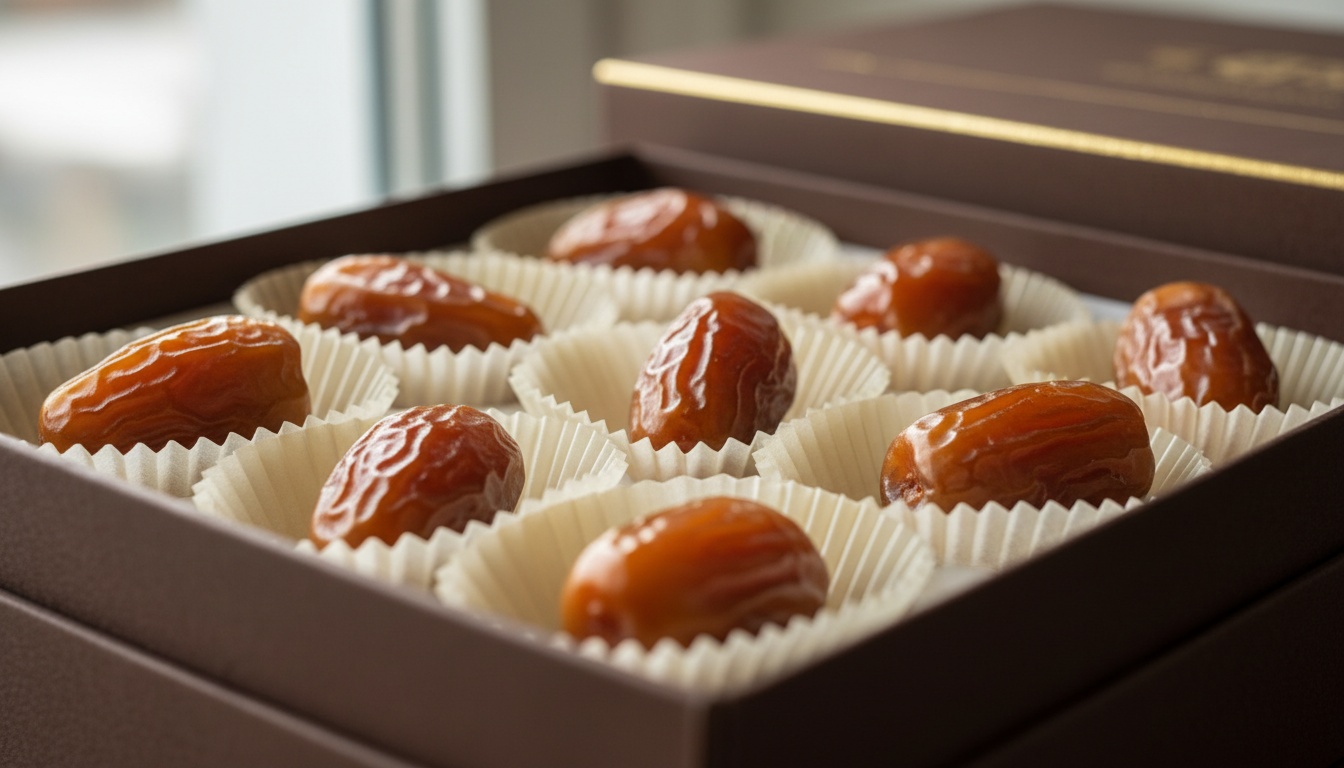
Khalas is the signature variety of Al-Ahsa in Saudi Arabia's Eastern Province — the world's largest date-palm oasis, inscribed by UNESCO as a World Heritage cultural landscape, with some 2.5 million palms — and the name most Gulf consumers reach for when they want a good everyday date. The fruit is medium-sized and oval, amber to light reddish-brown at full tamr stage, with a translucent honey-coloured skin and dense, almost fibre-free flesh carrying a distinctive caramel-butterscotch note. It is a semi-dry date, typically 16–20% moisture, which makes it ambient-stable with no cold chain required. Harvest runs from the rutab window in July through tamr packing in August–October, with Al-Kharj and Qassim supplementing Al-Ahsa supply. Grading is by count per kilogram — typically 60–70, 70–80 and 80–90 pieces/kg — then colour uniformity, skin condition and defect percentage, sold unpitted or pitted, loose-packed or pressed. Khalas is also grown in the UAE (Liwa, Al Ain) and Oman, where it is usually spelt Kholas; Al-Ahsa fruit is the benchmark the others are priced against, and a contract that says 'Khalas' without an origin clause can legitimately be filled from any of them. Lots ship against SGS or Intertek certification of moisture, count, foreign matter, infestation, mould and yeast, with Saudi phytosanitary certificates, fumigation records and Halal documentation as standard.
Khalas is the working end of the Saudi date trade with a flavour identity the cheaper volume dates lack, and it should be bought that way. It sits below Sukkari and Safawi on price and above Khudri, and for two applications it is not the budget option but the correct one: coffee service and everyday retail. Across the GCC, Khalas with gahwa is the default hospitality pairing, which makes it the natural listing for hotels, Arabic restaurants and speciality coffee operators building a dates-and-coffee offer — paying Sukkari money for that application buys nothing the guest will notice. For retail, it carries a varietal name Gulf-diaspora shoppers in the UK and Europe actually recognise, at a landed cost that supports an everyday price point rather than a gifting one. The commercial risks are origin and stock age. UAE and Omani Kholas is genuine fruit but trades at a discount to Al-Ahsa, so specify origin in the contract and verify it on the phytosanitary certificate rather than the carton print. Older stock shows sugar bloom — white crystallisation under the skin — which is harmless but kills retail appearance, so buy current-season crop and confirm pack dates. Storage is forgiving: cool, dry ambient holds the fruit for months, vacuum packs longer. Ambient container works year-round; reefer at 5–10°C is worth the premium only where colour on shelf is the sale. Al-Ahsa fruit normally ships in containers through Dammam, inside the Gulf. The Strait of Hormuz has been severely restricted since 28 February 2026, so that route is not moving normally and the loading port, Jeddah on the Red Sea where the packer can truck to it, is agreed before contract.
Excluded origins are not offered, including product re-exported, blended or re-processed through a third country. Every lot moves with a certificate of origin naming the producing plant, mine or grower country, and nothing is quoted before the seller and loading point are known.
Indicative reference
$1,200–2,400 USD / MT
as at September 2026
Reference level only — not an offer, and reviewed quarterly. Levels shown are as at September 2026. Firm pricing is quoted per RFQ, subject to volume, terms and inspection.
Typical Specification
Specifications are indicative and adjusted to the agreed contract and destination requirements. Final spec confirmed on COA / SGS.
Available Grades
Applications
- Coffee service & GCC hospitality (HORECA)
- Everyday retail & ethnic wholesale
- Ramadan volume programmes
- Date paste & bakery (Grade B)
- Dates-and-coffee gift packs
Category
Agri-Foods, Spices & Nuts
Incoterms
FOB · CFR · CIF
Pricing basis
USD / MT
Inspection
SGS / Intertek at load port
Khalas Dates — buyer questions
What is the difference between Saudi Khalas and UAE or Omani Kholas?
They are the same varietal family but not the same commercial product. Khalas is grown across the Gulf — Liwa and Al Ain in the UAE, and Oman, where it is usually spelt Kholas — and all of it is genuine fruit. Al-Ahsa fruit is the benchmark the trade prices against and carries a premium for colour, texture and name recognition. A contract that says only 'Khalas' can be filled from any origin, so if you are paying for Saudi fruit, name the origin in the contract and check it on the phytosanitary certificate, which states the country of export, rather than trusting the carton print.
How are Khalas dates graded for export?
By count per kilogram first — Premium at 60–70 pieces/kg, Grade A at 70–80, Grade B at 80–90 — then by colour uniformity, skin condition and defect percentage covering damaged, immature or fermented fruit. Larger counts command a premium because they come from thinned, better-managed palms, and the count is the number to fix in the contract: 'premium Khalas' with no count attached is not a spec. Pitting adds processing cost and slightly raises defect risk at the pitting stage, so on pitted fruit specify the defect tolerance after pitting, not before.
Do Khalas dates need a cold chain?
No — this is one of the variety's main commercial advantages. As a semi-dry date at roughly 16–20% moisture it is ambient-stable: a cool, dry store holds it in good condition for around twelve months, vacuum-packed fruit longer. What degrades is appearance rather than safety — older stock develops sugar bloom, a white crystallisation under the skin that is harmless but unsellable at retail — so buy current-season crop and confirm pack dates. Reefer at 5–10°C is worth paying for only on retail programmes where shelf colour drives the sale; bulk and ingredient fruit ships ambient year-round.
What is the minimum order, and what moves the price?
Container-load is the economic unit — roughly 12–14 MT of cartons in a 20 ft box, more in vacuum packs or pressed blocks — though trial orders of a pallet or two can be consolidated through Jeddah at a higher per-kilogram rate. The price variables that matter are count size, pack format (vacuum retail packs cost meaningfully more than loose cartons), origin, and above all timing: the market tightens sharply in the two to three months before Ramadan as GCC and diaspora retail programmes cover. Buyers who contract at harvest, August to October, buy at the soft end of the year.
Ready to source Khalas?
Send your quantity, specification, preferred Incoterms and destination port. Qualified requirements receive a workable offer against verified supply.
Have Khalas to sell? Submit an offer — we'll match it against live buyer demand.
More in Saudi Dates
Ajwa Dates
Madinah-only origin — graded by count, skin & provenance
Ajwa Al Aaliya Dates
Named-farm Ajwa from Madinah's Al-Aaliya basalt belt
Anbara (Amber) Dates
Madinah's largest date — graded on count, priced on size
Safawi Dates
Madinah semi-dry, near-black, ambient-stable · FOB Jeddah
Mabroom Dates
Madinah's long date — graded on length, sold on looks
Sagai Dates
Two-tone Najd semi-dry — graded by piece weight & count
Sukkari Dates
Qassim golden Sukkari — soft (rutab) & mufattal, by count
Khudri Dates
Semi-dry Saudi volume date — size-graded, year-round FCL
Saudi Medjool Dates
AlUla & Al-Jouf Medjool by calibre and skin grade
Barni Dates
Semi-dry Madinah date — Grade 1/2, Al-Ais provenance
Shalabi Dates
Scarce Madinah variety — lot-certified, part-load supply
Rabia Dates
Madinah value date graded on count, moisture and defects
Mashrooq Dates
Mid-tier Madinah date — caramel-sweet, sold by count band
Stuffed & Chocolate Dates
Stuffed & enrobed OEM lines · 18–20°C chocolate cool chain