
Sagai Dates
Two-tone Najd semi-dry — graded by piece weight & count
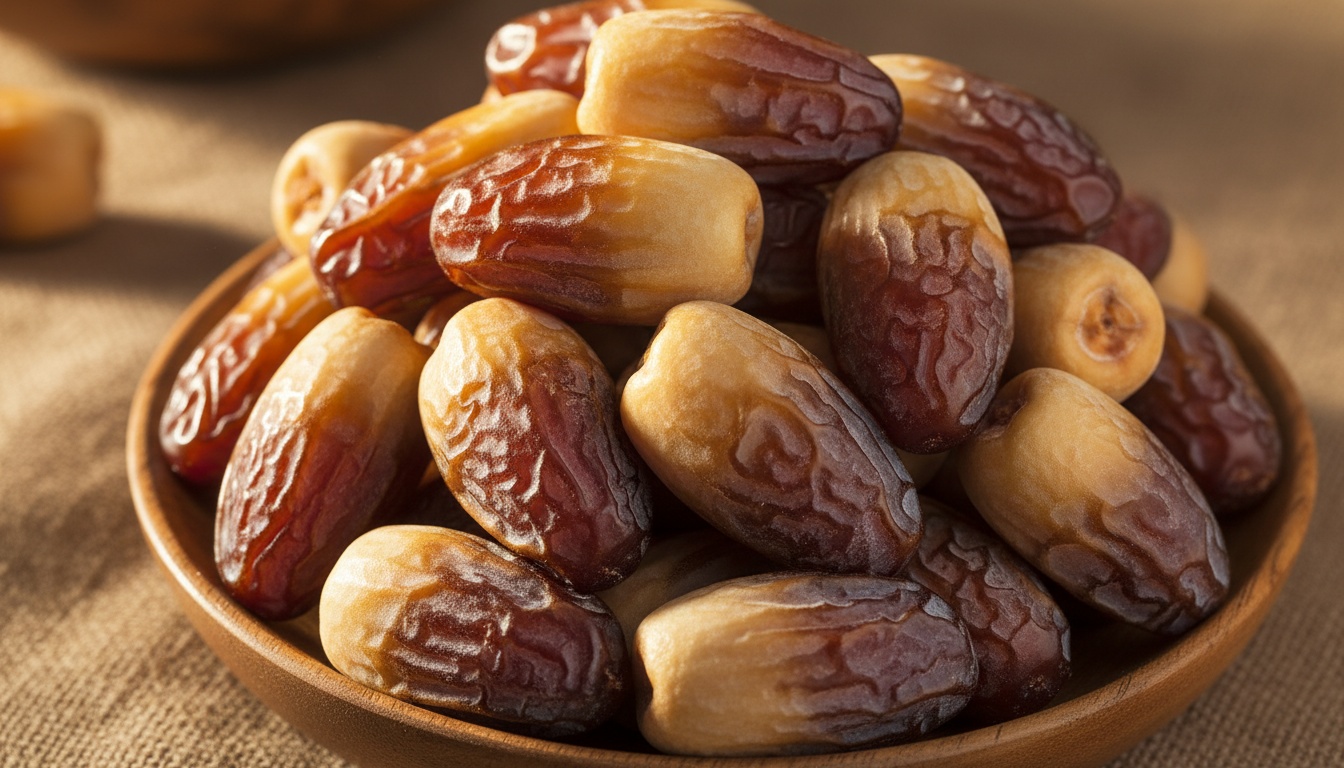
Sagai is the signature date of the Najd, grown in the palm belts around Riyadh — Al-Aarid and Al-Kharj — and in Al-Qassim to the north. It is instantly recognisable, and that recognisability is the commercial point: a genuine Sagai carries a dry, golden-yellow tip over a soft, light-brown base — two textures on one fruit. The colour break is not cosmetic variation to be graded away; it is the variety's identity, and Gulf and South Asian buyers check for it the way a cashew buyer checks a W-count. A lot that arrives uniformly brown has either been heat-damaged in transit or is not Sagai. The fruit is semi-dry — typically 14–18% moisture — elongated, and moderately sweet with a clean, non-cloying finish. Saudi packers grade Sagai by piece weight into Superior (14 g and up, roughly 70 fruit per kilo), First (10 g minimum, 90–100 per kilo) and Second, with export houses overlaying Jumbo/Large/Medium count language for international buyers. Harvest runs mid-to-late season, with new-crop cartons shipping from roughly September. Export lots move against SGS or Intertek certification of moisture, count per kg, foreign matter, infestation and mould, with Halal and phytosanitary documentation as standard and fumigation certificates where the destination requires them.
Sagai is the date for buyers whose customers find soft varieties too sweet. Sukkari sells on sugar and Medjool on size; Sagai sells on the bite — a crisp, dry tip giving way to a soft base — and on restraint, which is why it holds the Saudi hospitality table alongside qahwa and a loyal festive-gifting market across the Gulf, India and Pakistan, where it trades as sagai or sugai khajoor. On price it sits squarely mid-premium: comfortably above Khudri and Khalas, in the same tier as Safawi and Sukkari, below Mabroom, and well below anything carrying the Ajwa name. Pay the Superior premium when the fruit will be seen — gift boxes, trays, tins; a First-grade count at 90–100 per kilo eats almost identically and is the right buy for repacking and mixed assortments. Two contracting notes. First, specify tip colour retention, not just count: the golden tip browns with heat and age, and it is the quality clock on this variety — a Sagai that has lost its two-tone has lost its premium. Second, buy unpitted for gifting; pitting collapses the tip and erases the visual identity you paid for. Semi-dry moisture makes Sagai ambient-stable for around twelve months in cool, dry storage, but we recommend reefer for summer loadings to protect colour. Container-load or LCL for gift-pack programmes, FOB Jeddah, CFR or CIF.
Excluded origins are not offered, including product re-exported, blended or re-processed through a third country. Every lot moves with a certificate of origin naming the producing plant, mine or grower country, and nothing is quoted before the seller and loading point are known.
Indicative reference
$2,500–4,000 USD / MT
as at September 2026
Reference level only — not an offer, and reviewed quarterly. Levels shown are as at September 2026. Firm pricing is quoted per RFQ, subject to volume, terms and inspection.
Typical Specification
Specifications are indicative and adjusted to the agreed contract and destination requirements. Final spec confirmed on COA / SGS.
Available Grades
Applications
- Festive & corporate gifting
- Retail trays, tins & repacking
- Hospitality & qahwa service
- Ramadan hampers & assortments
- Snacking for low-sweetness preference
Category
Agri-Foods, Spices & Nuts
Incoterms
FOB · CFR · CIF
Pricing basis
USD / MT
Inspection
SGS / Intertek at load port
Sagai Dates — buyer questions
How do I verify a lot is genuine Sagai?
By the colour break. Genuine Sagai carries a dry, golden-yellow tip over a soft light-brown base — two textures on one fruit — and the contrast should be visible across the carton, not on the odd piece. Uniformly brown lots offered as Sagai are either heat-damaged, carryover crop, or a cheaper Najd variety relabelled. Ask for dated photographs of the actual lot before fixing, and write tip colour into the contract as an acceptance criterion alongside count. We arrange pre-shipment inspection at the packhouse so the two-tone is verified before the container is sealed, not argued about on arrival.
How is Sagai graded, and what should I write into the contract?
Saudi packers grade on piece weight: Superior at 14 g and up (about 70 fruit per kilo), First at a 10 g minimum (90–100 per kilo), then Second for repack and industrial use. Export houses translate this into Jumbo/Large/Medium count language for international buyers. Specify the count per kg, the maximum percentage of broken or de-tipped fruit, moisture within the 14–18% semi-dry band, and tip colour retention. The commonest error is buying on grade name alone — 'First grade' from two different packers can differ by twenty fruit per kilo unless you fix the count in the contract.
Where does Sagai sit on price against other Saudi varieties?
Mid-premium. It prices comfortably above Khudri and Khalas, the volume dates; in the same tier as Safawi and Sukkari; below Mabroom; and well below Ajwa, which trades on Madinah provenance in a market of its own. Within Sagai, the spread between Superior and Second is driven by piece weight and appearance rather than eating quality, which overlaps considerably — so pay the Superior premium only where the fruit is presented whole. New-crop cartons from September carry the best colour and the firmest prices; carryover lots discount as the golden tip darkens.
What are the storage requirements and minimum order?
Sagai is semi-dry and ambient-stable for around twelve months in cool, dry storage below roughly 18 °C — a real commercial advantage over soft dates, which need a cold chain. The caveat is colour: heat ages the golden tip towards brown, so we recommend reefer for summer loadings out of Jeddah even though the fruit itself would survive ambient. Standard supply is container-load — roughly 12–14 MT of cartons in a 20 ft box — on FOB, CFR or CIF terms; smaller gift-pack programmes can be consolidated LCL. Vacuum packing extends shelf life for retail formats.
Ready to source Sagai?
Send your quantity, specification, preferred Incoterms and destination port. Qualified requirements receive a workable offer against verified supply.
Have Sagai to sell? Submit an offer — we'll match it against live buyer demand.
More in Saudi Dates
Ajwa Dates
Madinah-only origin — graded by count, skin & provenance
Ajwa Al Aaliya Dates
Named-farm Ajwa from Madinah's Al-Aaliya basalt belt
Anbara (Amber) Dates
Madinah's largest date — graded on count, priced on size
Safawi Dates
Madinah semi-dry, near-black, ambient-stable · FOB Jeddah
Mabroom Dates
Madinah's long date — graded on length, sold on looks
Sukkari Dates
Qassim golden Sukkari — soft (rutab) & mufattal, by count
Khalas Dates
Al-Ahsa amber semi-dry, 60–90 count, ambient-stable
Khudri Dates
Semi-dry Saudi volume date — size-graded, year-round FCL
Saudi Medjool Dates
AlUla & Al-Jouf Medjool by calibre and skin grade
Barni Dates
Semi-dry Madinah date — Grade 1/2, Al-Ais provenance
Shalabi Dates
Scarce Madinah variety — lot-certified, part-load supply
Rabia Dates
Madinah value date graded on count, moisture and defects
Mashrooq Dates
Mid-tier Madinah date — caramel-sweet, sold by count band
Stuffed & Chocolate Dates
Stuffed & enrobed OEM lines · 18–20°C chocolate cool chain